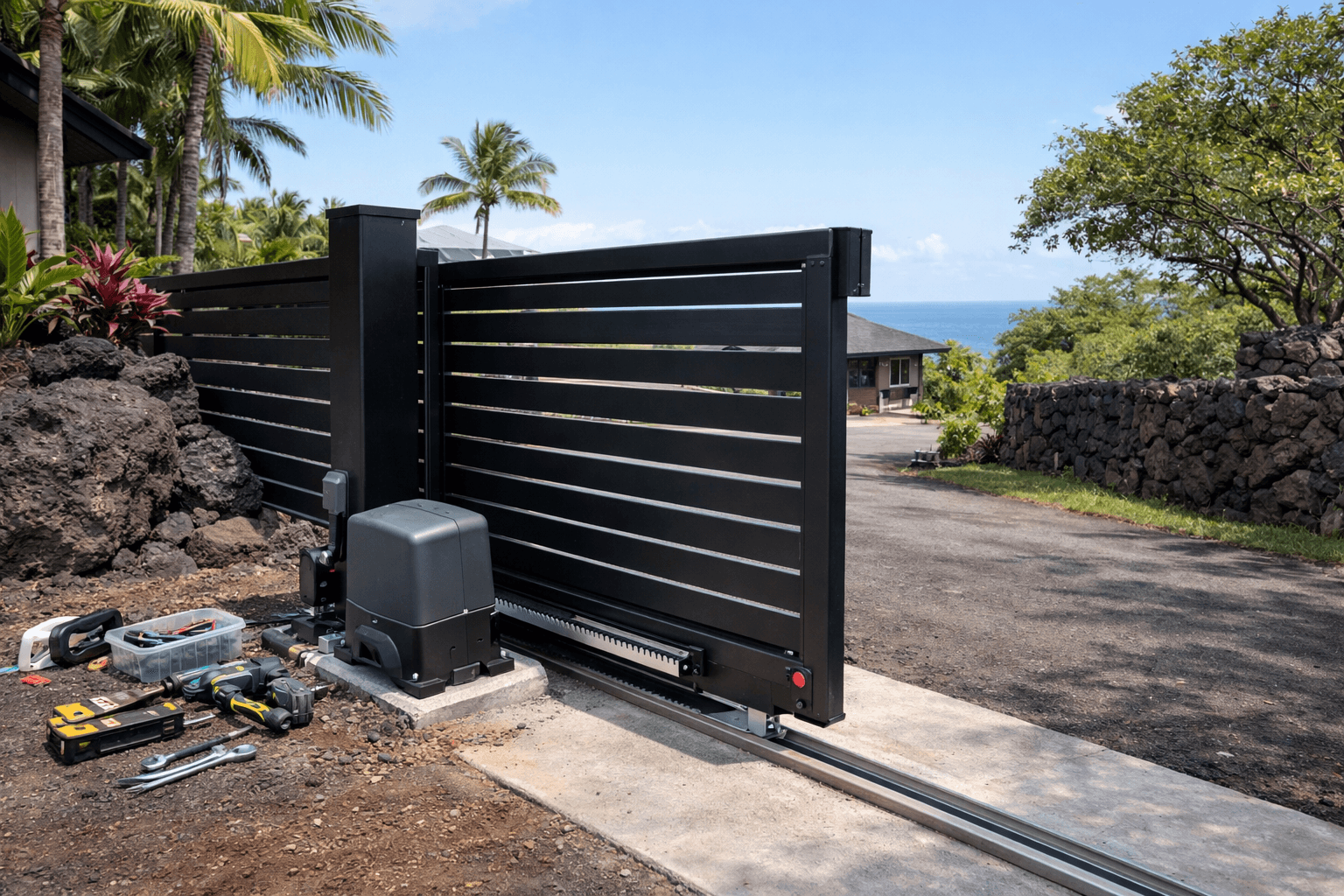
What is an automatic gate opener and do I need one for my Big Island property?
An automatic gate opener is a motorized system that opens and closes your driveway gate without you leaving your vehicle — using a remote, keypad, smartphone app, or sensor. On the Big Island, where properties often sit on longer driveways or rural lots, an automatic opener adds real convenience, security, and curb appeal without requiring you to step out every time you come home.
Should I choose a solar-powered or electric gate opener for my Big Island home?
For most Big Island homeowners, solar-powered gate openers are the smarter choice — especially on rural properties in areas like Pahoa, Ocean View, Mountain View, or Volcano where grid power can be unreliable or a long run to the gate is expensive to trench. Solar openers run on a battery charged by Hawaii's abundant sun, so your gate keeps working even during outages. Electric openers make more sense when you already have power close to the gate and want higher cycle capacity for a busier entrance.
How long does it take to install an automatic gate opener in Hilo or Kailua-Kona?
A straightforward automatic gate opener installation typically takes one day. The timeline depends on whether trenching is needed for wiring, the gate's weight and swing style, and whether you're adding access control features like a keypad or intercom. A family-owned fencing crew with local experience — familiar with Big Island soil conditions and lava rock terrain — can give you a firm timeline during your free estimate visit.
If you've been thinking about automating your driveway gate, this guide covers everything you need to make a confident decision: how the two main opener types compare, what affects installation on Big Island properties, and which features are actually worth adding.
Solar vs. Electric Gate Openers: How Do They Compare?
This is the question most Big Island homeowners ask first, and for good reason. The island's geography creates real differences in what works. A property in Waimea or Holualoa with a long driveway and intermittent cloud cover has different needs than a home in Waikoloa Village with utility lines already running to the driveway entrance.
- Power source: Solar openers run on a rechargeable battery topped up by a small panel — no trenching, no monthly electricity cost. Electric openers plug into your existing power supply and can handle higher gate traffic.
- Grid reliability: Rural areas like Kalapana, Kapoho, and Na'alehu see more outages than urban corridors. Solar keeps your gate functional when the power goes out.
- Installation complexity: Solar installs are typically simpler since there's no conduit run from the house. Electric installs may require trenching, which adds time and cost depending on distance and ground conditions.
- Cycle capacity: High-traffic commercial gates or properties with multiple vehicles moving in and out daily may benefit from hardwired electric power for consistent motor performance.
- Maintenance: Both types are low-maintenance. Solar panels need occasional cleaning; electric connections should be checked periodically for corrosion, especially in coastal areas like Puako or Kawaihae where salt air is a factor.
Solar vs. Electric Gate Openers: Side-by-Side
| Factor | Solar-Powered | Electric (Grid-Tied) |
|---|---|---|
| Power source | Battery + solar panel | Utility grid |
| Works during outages | Yes — battery backup built in | No (unless separate backup added) |
| Trenching required | Usually not | Often yes |
| Best for | Rural lots, long driveways, off-grid | Urban properties, high-traffic gates |
| Coastal salt-air risk | Low (fewer exposed connections) | Moderate (wiring needs protection) |
- Power source: Solar = battery + panel vs. Electric = utility grid
- Outage protection: Solar works during power cuts — electric does not without a separate backup
- Trenching: Solar rarely needs it — electric often does
- Best fit: Solar for rural Big Island lots — electric for high-traffic urban driveways
- Salt air durability: Solar has fewer exposed connections to corrode near the coast
What Gate Types Work with Automatic Openers?
Not every gate is a candidate for automation as-is. The opener type needs to match your gate's design. The two most common configurations on Big Island residential properties are swing gates and sliding gates.
Swing gates open like a door — single or double panel. They need enough clearance on the inside of the driveway to swing open fully. These are common on residential properties in Kea'au, Captain Cook, and Waimea. Swing gate openers are available in both solar and electric configurations.
Sliding gates roll horizontally along a track. They're ideal when the driveway slope doesn't allow a swing gate to open cleanly, or when space is tight. Sliding gates are popular on commercial properties and larger residential lots in Hilo and Kailua-Kona. They typically require more robust motors and are usually hardwired.
If your existing gate isn't already built for an opener, a good installer will assess the frame weight, hinge condition, and post strength before recommending a system. Automating a gate that isn't structurally sound is a short path to a failed opener and a damaged gate.
What Features Are Actually Worth Adding?
Opener manufacturers pack their spec sheets with optional add-ons. Here are the ones Big Island homeowners actually use:
- Keypad entry: Lets guests, contractors, or delivery drivers enter a code without you being home. Simple, reliable, and widely used on properties in Pahala, Honoka'a, and rural Hamakua Coast areas.
- Intercom or video intercom: Lets you see and speak to visitors before opening the gate. Useful for larger residential properties and light commercial uses.
- Smartphone control: Some newer openers connect via Wi-Fi or cellular so you can open the gate remotely. Practical for vacation rentals and properties you don't visit daily.
- Safety sensors and auto-reverse: These stop and reverse the gate if something — or someone — is in its path. This is a must-have if children, pets, or heavy equipment are regularly near the gate.
- Battery backup (for electric openers): If you choose a hardwired system, adding a battery backup means a power outage won't trap you inside your own property.
According to the UL 325 safety standard for gate operators, all commercial gate openers and most residential systems sold today are required to include entrapment protection — so verify that your installer is using compliant equipment.
Why Big Island Conditions Require a Local Installer Who Knows the Terrain
Big Island properties throw things at fence and gate installers that mainland crews simply don't encounter. Lava rock substrate makes trenching slower and more technical. Coastal salt air in areas like Puako, Kawaihae, and Honomu accelerates corrosion on hardware that isn't properly coated or sealed. Rainfall patterns shift dramatically from the Hilo side to the Kona side, and that affects both solar panel performance and the long-term condition of gate hardware.
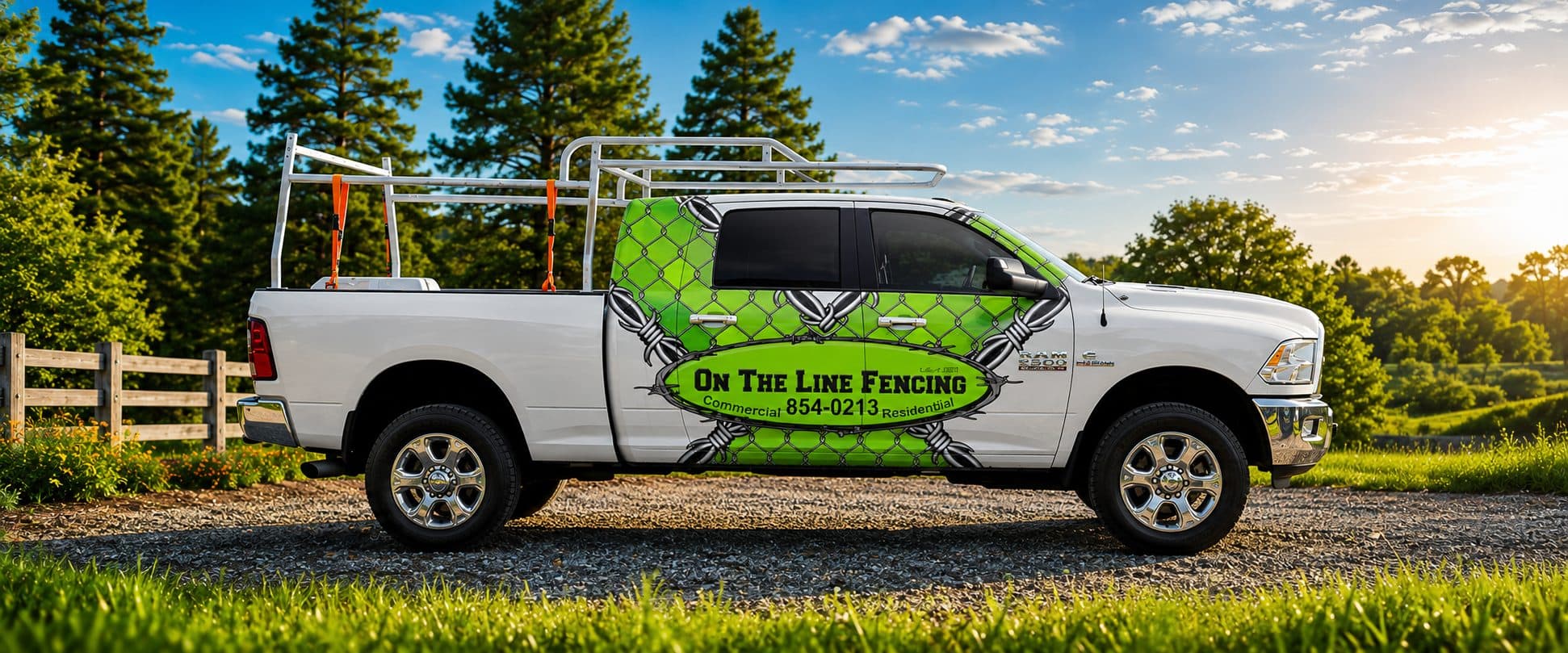
A crew that's worked across the island for over 20 years knows which products hold up and which ones don't. On The Line Fencing is family-owned and based right here in Hilo — the team has installed automatic gate openers and access control systems on properties from Waikoloa Village to Volcano, Ocean View to Laupahoehoe. They bring that hands-on familiarity to every free estimate.
The National Electrical Code (NEC) governs how wiring for electric gate systems must be installed — another reason to work with a licensed, experienced installer rather than a handyman who's never run conduit through lava rock terrain.
If you're on a rural lot, a solar-powered gate opener paired with a quality keypad or intercom system is usually the most practical setup. If you're closer to town or have a high-traffic driveway, a hardwired electric system with a battery backup is worth the extra installation step. Either way, the right answer starts with a site visit — not a spec sheet.
Before Your Estimate: 5 Things to Know
- Measure your gate opening width and note whether it swings or slides
- Know how far your gate is from your nearest power source
- Note whether your driveway is sloped — this affects swing gate clearance
- Decide which access method you want: remote, keypad, app, or intercom
- Ask your installer about corrosion-resistant hardware if you're within a mile of the coast
Frequently Asked Questions
Can a solar gate opener handle Hawaii's cloudy or rainy days?
Yes — a quality solar gate opener stores power in a battery that can run the gate for several days without direct sunlight. The Hilo side of the island gets more cloud cover than the Kona or Kohala coasts, but properly sized solar systems are designed with that buffer built in. Your installer can size the panel and battery to match your local sun exposure and daily gate cycle count.
Do I need a permit to install an automatic gate opener on my Big Island property?
It depends on the scope of the work. A simple opener installation on an existing gate typically doesn't require a permit. However, if new electrical wiring is being run or a new gate structure is being built at the same time, permits may apply under Hawaii County building codes. A licensed, experienced installer will know what's required for your specific situation and handle the paperwork if needed.
How do I maintain my automatic gate opener in a coastal environment?
Inspect the hardware every six months — look for rust, corrosion on terminals, and any debris caught in the track or hinge mechanism. Wipe down the solar panel if dust or bird droppings are blocking it. Lubricate moving parts with a silicone-based lubricant (not WD-40, which attracts dirt). If you're within a mile of the ocean, ask your installer to use marine-grade hardware from the start to reduce long-term maintenance.
Can I add an automatic opener to my existing gate, or do I need a new one?
Many existing gates can be automated without replacement, but it depends on the gate's weight, condition, and how it's mounted. Gates that are warped, have weak hinges, or aren't properly plumb will cause problems for an opener motor. A good installer will assess your existing gate during the estimate visit and tell you honestly whether it's a solid candidate for automation or whether a new gate makes more sense.
What's the difference between an automatic gate opener and an access control system?
An automatic gate opener is the motor and arm that physically moves your gate. An access control system is what decides who gets in — keypads, intercoms, card readers, smartphone apps, or sensors. Most residential installations use both together. The opener does the heavy lifting; the access control system is how you manage who can activate it. On The Line Fencing installs access control systems alongside gate openers as a complete package.
Ready to automate your driveway gate? On The Line Fencing has been installing gate openers and gate systems across the Big Island for over 20 years — from solar setups in rural Pahoa to hardwired electric gates in Kailua-Kona. Call us today at 808-854-0213 for a free estimate. We're available Monday through Friday, 8:00